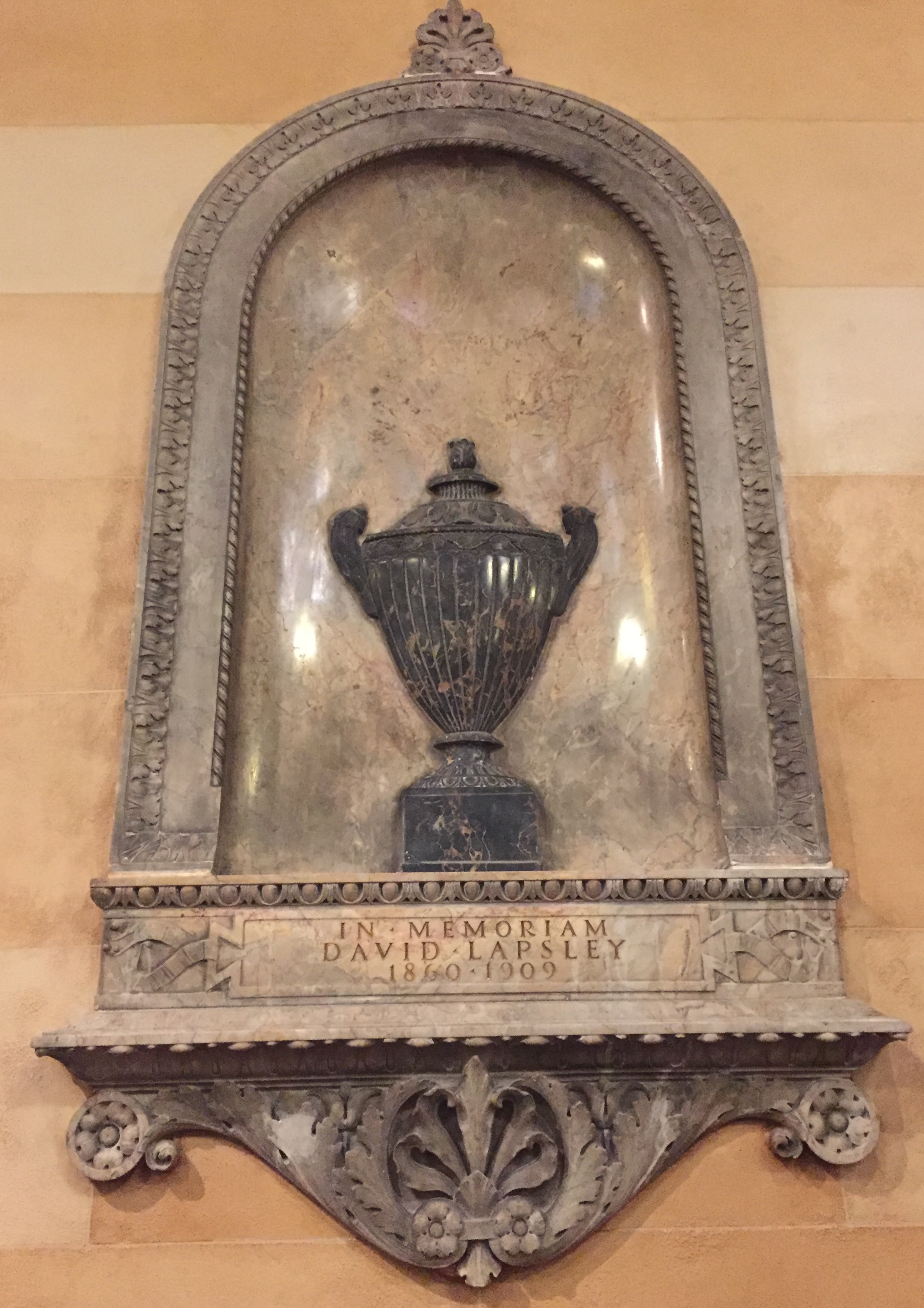
 Located in the church on the west end of the south wall is a memorial plaque for David Lapsley, whose family were members of the parish. David died in 1909 and left the the church “the sum of ten thousand dollars, to be known as the David Lapsley Fresh Air Fund… for the purpose of sending into the country children resident in New York City.” Over the past decade the fund has been used to pay for children to attend Incarnation, an Episcopal summer camp in Connecticut. Income from this fund will be used to send a child to camp this summer and we would like to challenge the parish to donate $1,400 to send another child. The fund has dwindled some over the years, but we would like to rebuild it and continue the generous spirit of the Lapsleys’ concern for children.
Your contribution to this outreach ministry can make a huge difference! Donations are 100% deductible and you’ll receive written confirmation to use when filing your tax return with the IRS. You may send a check or place your donation in the offering plate by May 1st. Please make the check payable to “Church of the Ascension” and write “Lapsley” on the check memo line. Special envelopes are available in the narthex.
Located in coastal Connecticut on 700 wooded acres surrounding a private lake, Incarnation Camp is the country’s oldest co-ed camp. Since 1886 they have provided a fun-filled, traditional camp with hands-on learning and group living in the great outdoors. Incarnation camp is a place to bond with new friends, develop an appreciation for nature and celebrate the uniqueness of each individual. Camp activities include sports, arts and crafts, nature, drama, adventure, horseback riding, swimming and boating with instruction. For more information here is a link to the Incarnation Camp.