 Déjà vu, all over again: “I wonder who that masked man was?!”
Two stories of mistaken identity. No, worse: of hindered recognition!
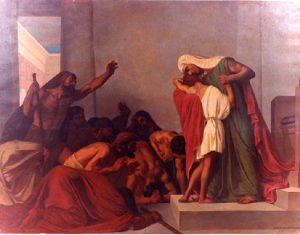
In Genesis 43, famine has struck. Joseph’s brothers journey to buy corn from the Pharoah, as there are supplies still in Egypt. They’ve already made one successful trip; however they failed to notice that their benefactor, Pharoah’s #1 Man, is … their brother! What??
Mark 4 finds us in the storm-tossed ship with Jesus and his disciples. Jesus quiets the waves, and they are astounded! Wow! “Who is this guy?!” They seem oblivious. Is this the first time he’s pulled a rabbit out of the hat? I don’t think so!
Why are we so slow to recognize divinity – whether in our Lord himself, or in our own brother? Our vision breaks down as if we’re hard-wired to doubt, to sell one another short; even when that “unknown” soul may be doing us a mortal favor. We love the idea that the stranger in the next pew might be Jesus. But, come on, get real: THAT guy? No way!
Faith is a leap. But if we don’t open our senses and our hearts and our imaginations to “recognize” one another, how can we ever hope to encounter the saints … and our Lord!
Genesis 43:1-15
Psalms 70, 71, 74
1 Corinthians 6:12-30
Mark 4:21-34